So I beg you, brothers and sisters, because of the great mercy God has shown us, offer your lives as a living sacrifice to him—an offering that is only for God and pleasing to him. Considering what he has done, it is only right that you should worship him in this way.Don’t change yourselves to be like the people of this world, but let God change you inside with a new way of thinking. Then you will be able to understand and accept what God wants for you. You will be able to know what is good and pleasing to him and what is perfect. ~ Romans 12:1-2 (ERV[1])
Someone once said to be conformed to the image of Christ; we must be transformed by Him. I would argue one of the best places to learn what this person means is to study Paul’s letter to the Romans. The most general outline breaks the letter into two significant sections; chapters 1-11 consider doctrinal theology, i.e., what we are to believe/know; chapters 12-16 teach practical theology, i.e., what we are to do. And verses 1-2 of chapter twelve kicks off the practical theology section with a bang. There is so much packed into these two verses that I could not fit it all into this post. Therefore, I want you to consider one phrase in its context: it is only right that you should worship him in this way.
Christians today have so many worldly distractions pulling them eight ways to Sunday. I am reminded of a story of a young police officer taking his final exam at a police academy in north London, and the following question was posed:
“You are on patrol in the outer city when an explosion occurs in a gas main in a nearby street. On investigation you find that a large hole has been blown in the footpath and there is an overturned van nearby. Inside the van there is a strong smell of alcohol. Both occupants—a man and a woman—are injured. You immediately recognize the woman as the wife of your Chief of Police, who is at present away in the USA. A passing motorist stops to offer you assistance and you realize that he is a man who is wanted for armed robbery. Suddenly a man runs out of a nearby house, shouting that his wife is expecting a baby and that the shock of the explosion has made the birth imminent. Another man is crying for help, having been blown into the adjacent canal by the explosion, and he cannot swim.”
The examination question concluded: “Describe in a few words what actions you would take.”
The young man thought for a moment, picked up his pen and wrote, “I would take off my uniform and mingle with the crowd.”[2]
We can certainly identify with this police officer. As Christians, it is often easier to take off our Christian uniform and mingle with the crowd. But we are to remain unique, to retain our Christian character, wherever we are and whatever the circumstances. One of the means of grace God calls us to do to maintain our uniqueness is worship.
Paul begins 12:1 with “therefore,” which is a term of conclusion. The immediate context refers to the glorious doxology in Romans 11:33- 36 and then to the bedrock truths concerning “the gospel” expounded in the first 11 chapters. And the apostle tells us that we (notice that “bodies” here mean our “whole beings,” i.e., our hearts, minds, physical bodies) have been consecrated, that is, separated from a common to a sacred use or devoted and dedicated to the service and worship of God.
The question then becomes, what does that mean? How do we worship this way or perform our service of worship? Service of worship is latreia in the original Greek language. It means to perform religious rites as part of worship. It refers first to any service or ministration rendered for the service of God. Wuest reminds us, “It is used in Hebrews 9:6 of the priests who performed the sacred service. Thus, it speaks of priestly service. Doubtless, in the thinking of Paul, the word was used here to speak of the believer-priest’s sacred service, not as the Levitical priests, offering a burnt sacrifice which was apart from themselves, but a living sacrifice which was not only part of themselves but also entailed the giving of themselves in connection with the giving of their bodies to the service of God, for a person cannot act independently of his body.”[3] Therefore, worship is nothing more or less than being what you were made to be and doing what you were made to do.
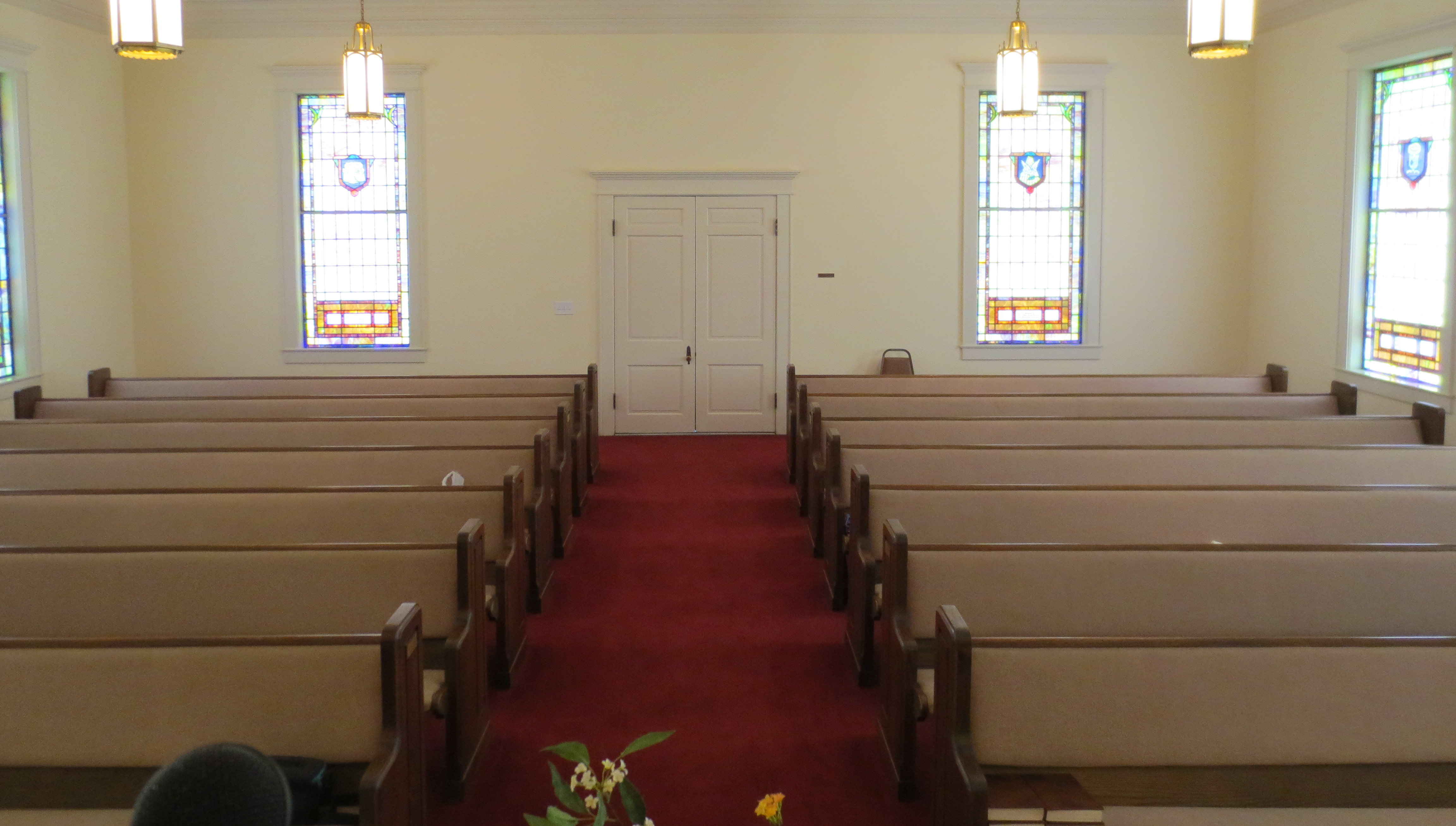
To prepare us to live daily our personal service of worship, God calls us to corporate worship. The corporate worship of God, which we do on Sabbath days, can be described as the gathering of God’s people, in God’s presence, on God’s terms, expressing our submission to the Lord with actions of faith, hope, and love. The activities that represent this submission generate faith, hope, and love around the Word of God preached and sung, and partaking of the Sacraments.
We also find that God is present in our corporate worship. God’s people meet in the “Lord’s temple” for edification (Eph. 2:19-22). When believers gather together, they become the “building,” “house,” and “body” of the LORD. So, it is not the building but the people themselves. God’s presence is tied to His people, a pattern that fills the entire biblical story (Acts 7:2-52). So, what we do together in worshiping God is the expression of our communion with God as His people. Here, it helps to realize the importance of our unity and order in worship. What we do serves a purpose greater than our individual experience with God. As important as your relationship with God is, worship is about a communal experience with God. We meet God together.
However, worshiping God together is essential to creating conditions for biblical change within our personhood to take into the chaotic crowd of the world. It is in our corporate worship that our spirits are renewed, our bodies and wills refreshed, and our armor (Eph. 6:10-18) polished. When we do this, we give a once-for-all commitment to follow Jesus Christ as his disciple, followed by a lot of little responsibilities and adjustments and surrenders along the way. In giving ourselves, we are turning over to God the most valuable thing we can give—our whole being. I’m convinced this continual surrender of corporate worship is the key to being used by God in our personal service of worship.
David Brainerd was an American colonial missionary to the Indians who died at the age of twenty-nine. His diary reveals a young man intensely committed to God. Brainerd once said to Jonathan Edwards: “I do not go to heaven to be advanced but to give honor to God. It is no matter where I shall be stationed in heaven, whether I have a high seat or a low seat there. My heaven is to please God and glorify Him, and give all to Him, and to be wholly devoted to His glory.[4]
[1] Copyright © 2006 by Bible League International, Easy-to-Read Version.
[2] From Martin Dale’s Sermon, “The Lord’s Prayer.” https://www.sermoncentral.com/sermon-illustrations/66131/a-young-police-officer-was-taking-his-final-exam-by-sermon-central. Accessed on December 07, 2022.
[3] Wuest, K. S. Wuest’s Word Studies from the Greek New Testament: Eerdmans
[4] https://www.todayintheword.org/. Accessed on 12/07/22.
 Andrews PCA