

“But the plans of the Lord stand firm forever, the purposes of his heart through all generations.” (Psalm 33:11)
Introduction
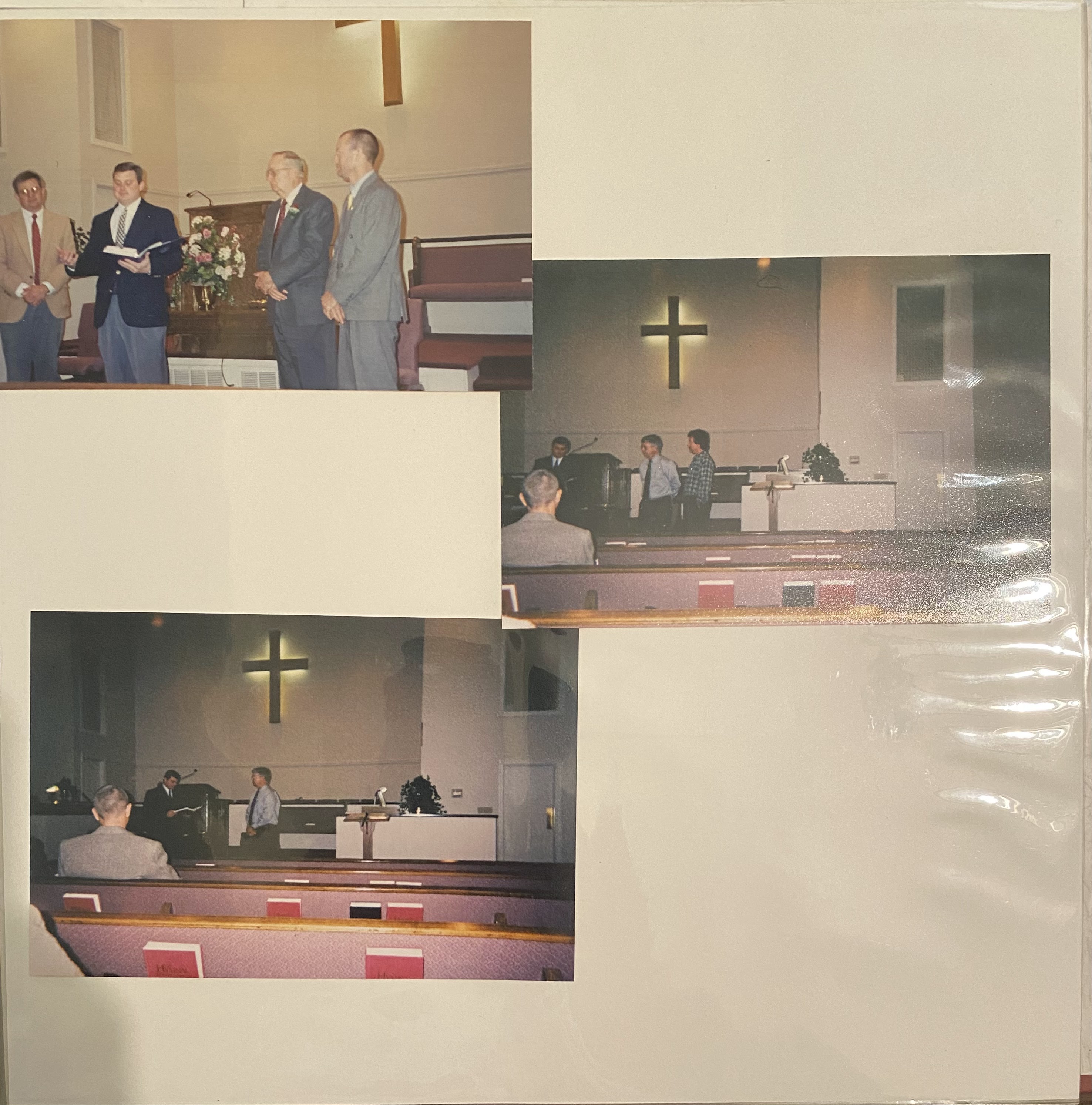
Today is a special day for me. Today is the twentieth anniversary of my ordination into pastoral ministry. If there is one word to describe my feelings, it is thankful. I am thankful to Christ, my Savior, that He decided so long ago in eternity past that I would be one of His children (Eph. 1:4). In some sense, I always had an inclination that I would be a preacher. Of course, I had no idea what that would entail. When I became a teenager, my life sure did not reflect my regenerated heart. When I entered college, my head told me to go for a degree that would get a good-paying job to support a family. I did that, and Lisa and I got involved with our home church serving as Sunday School teachers and youth leaders, and I as a deacon and eventually a ruling elder. However, time marched on, and the call to pastoral ministry never left my heart. I am thankful it never left my heart because I would not be the man I am today without answering the call.
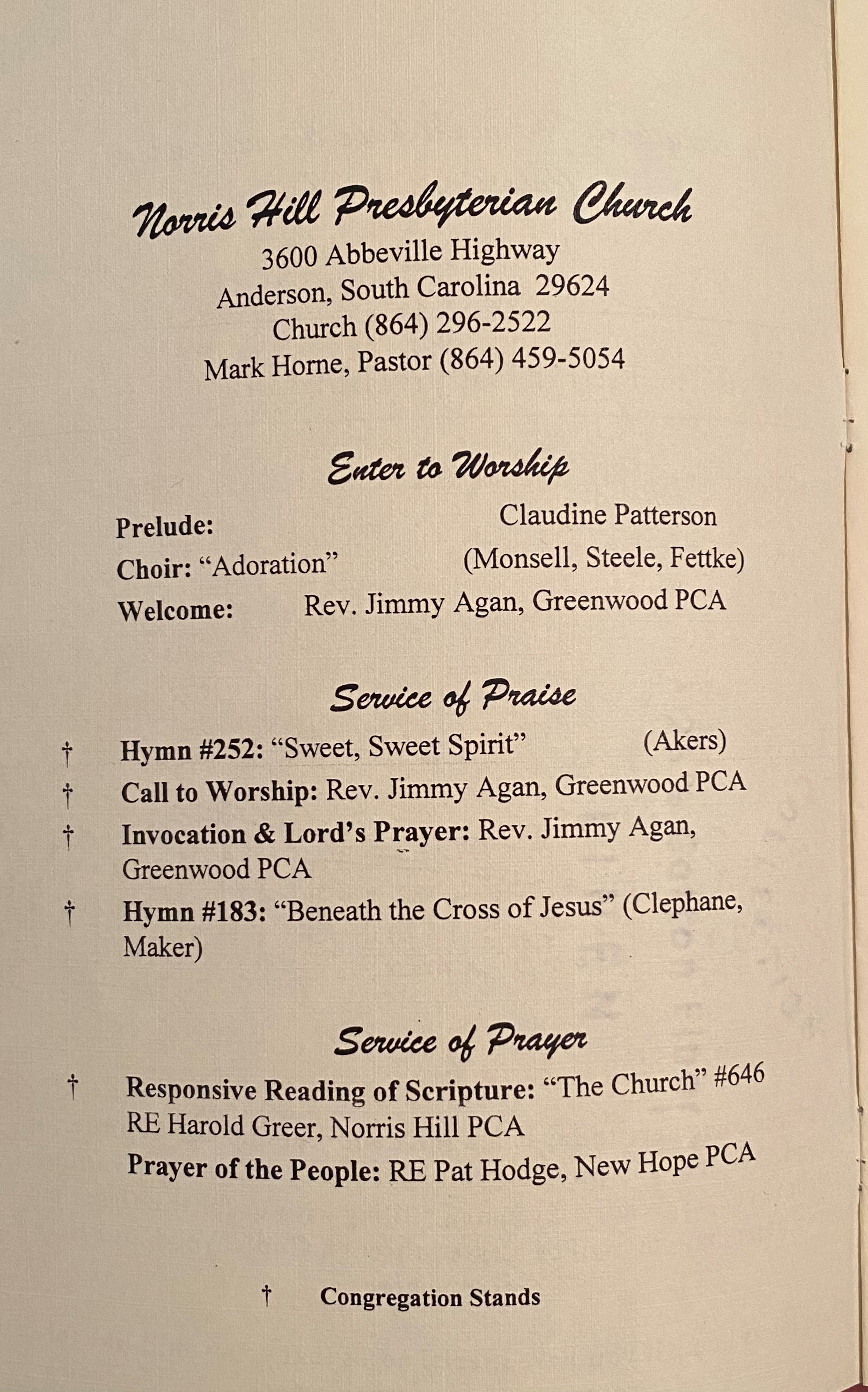


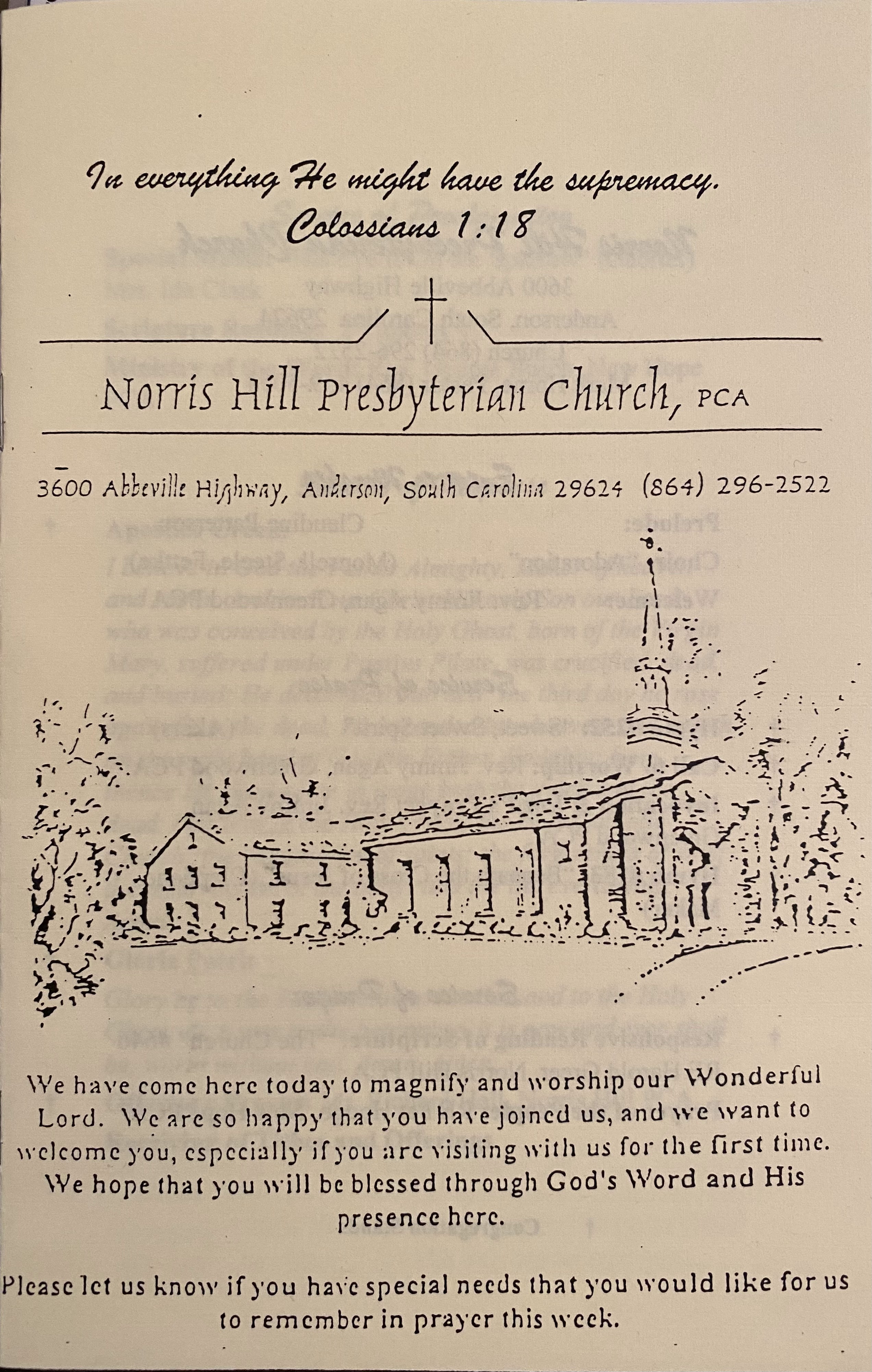
The bulletin of my ordination service 11/03/2002.
Called to What?
When people enter seminary and become a candidate for ministry in their presbytery, many know exactly the “what” of their calling. For example, some know they are going into missions to gather God’s sheep in Taiwan. Others know they will serve the youth at a particular church. Still, others know they want to preach. Many others are like I was and only go under the care of their presbytery to be assessed further to ensure their call is from the Lord and have no other inclinations than that one. I am thankful.
I knew I was called to ministry, and the boxes got checked by the candidate’s committee of Calvary presbytery. They determined I had the gifts needed to do the work of the Lord. However, one of my seminary class assignments was to read a book by Dr. Harry Reeder called From Embers to a Flame. That book changed my life. I read it several times over, and finally, I knew the “of what” to my call—to pastor small to midsize churches and revitalize them. It is to this I committed my life’s work. I am thankful.

Failing
An A.W. Pink quote I love says, “What is God’s remedy for dejection at apparent failure in our labors? This – the assurance that God’s purpose cannot fail, that God’s plans cannot miscarry, that God’s will must be done. Our labors are not intended to bring about that which God has not decreed.”[1] This quote has been a great comfort to me many times over the last twenty years. If there is one thing I have done well at this calling, it is failing. I mismanaged certain situations. I miscounseled sheep in other circumstances. Ungodly counsel enticed me to take specific paths (it is no excuse, but I thought they were godly at the time). And I certainly managed to fall on my face plenty of times on my own. Like David, I found myself asking God, “why is this happening” (Psalm 22). There are two particular failures that many tearful cries went up to the Lord. Yes, I am even thankful for those times.
Failure in ministry taught me much over the last twenty years. More than anything, it taught me humility. I am not as intelligent, holy, or patient as I think. Yes, I have education, but I learned quickly there are sheep-leaders in the church without degrees and less read who are much smarter than me. God taught me to be counseled by people He places in my path, which I never thought would have the insight they did. I am thankful.

I also learned to lean on people. Naturally, I am a take-on-the-world “myself and God” kind of person, and God is not even in the co-pilot seat. I usually ask Him to sit in first class, and I will call Him when I need Him. My personality trait is fixing things and people, not just because I am a man. Many leadership “tests” have proven that this is how God made me. And as noble as I would like that to sound, I have found myself in hot water trying to fix things myself instead of calling for help. God taught me to surround myself with accountability partners and leaders when tough times come. I am thankful.
Failure in ministry taught me that every church has its own personality. Scripture teaches that each church has different personalities that function and grow together to make that local body (Col. 2:19, Eph 4:15-16, 1 Cor. 10:16-17). And, of course, each local body grows and functions together to make Christ’s Bride on earth. I know this is a time-less concept that includes all churches of all ages (WCF 25). However, it is true presently. Each church I pastored over the years has its own unique personality. Unfortunately, there were times I tried to impose my will on a congregation that did not mix well and, in the ultimate scheme of things, did not really matter. I made it so “my way” is better than “their way” (or, in one instance, they made it “our way” is better than “your way”). I learned to die to my plans, which was hard. I needed patience, and God gave it to me. Sinclair Ferguson says, “The will of God means death to our own will, and resurrection only when we have died to all our own plans.” I am thankful.
Conclusion
You may wonder how in the world I am where I am with so much failure. My reply would be that this is the wrong question; but the correct answer is this: “I have been crucified with Christ. It is no longer I who live, but Christ who lives in me. And the life I now live in the flesh I live by faith in the Son of God, who loved me and gave himself for me” (Gal. 2:20; c.f. Eph. 2:10, Phil. 4:19; 2 Cor. 12:10). More importantly this, “And the world is passing away along with its desires, but whoever does the will of God abides forever” (1 John 2:17). Although I have failed and failed over the last twenty years, and almost walked away from ministry once, I have done God’s sovereign will, and He has used me despite my sinful self. Praise be to Christ, my Savior. I am thankful.

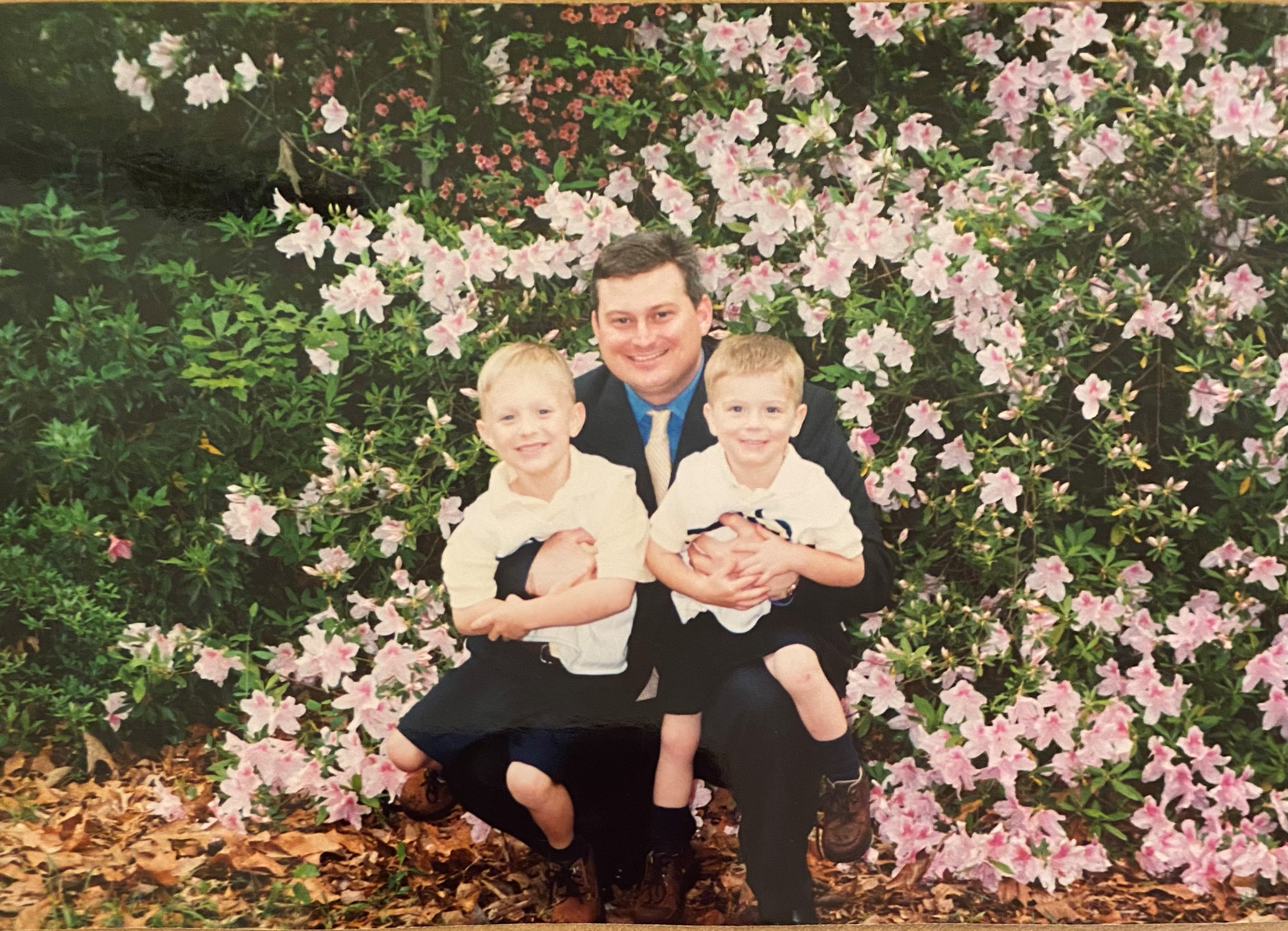
Our first Easter as a pastor’s family.
[1] I cannot remember the primary source of this quote. I read it and have it written down in one of my journals.
 Andrews PCA