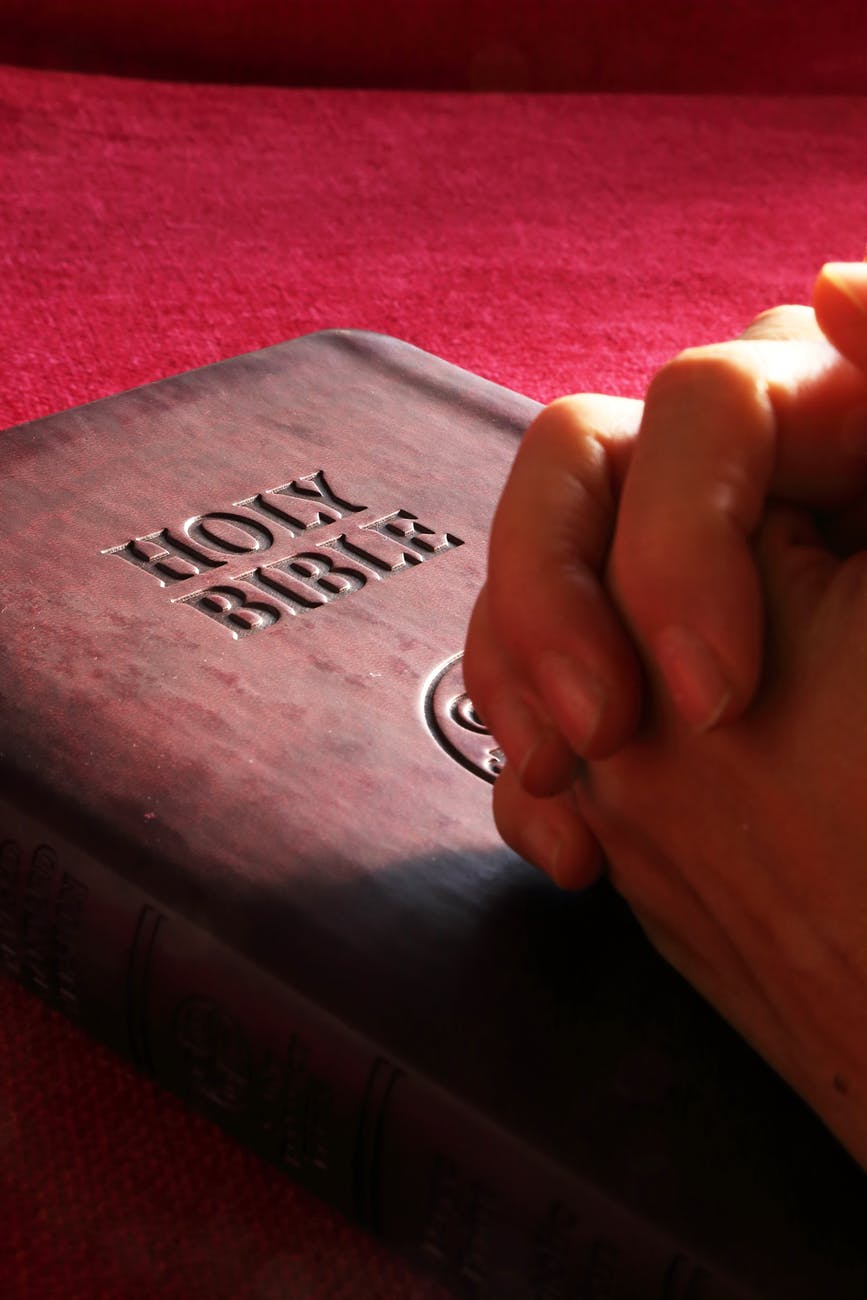
25 I will sprinkle clean water on you, and you shall be clean from all your uncleannesses, and from all your idols I will cleanse you. 26 And I will give you a new heart, and a new spirit I will put within you. And I will remove the heart of stone from your flesh and give you a heart of flesh. 27 And I will put my Spirit within you, and cause you to walk in my statutes and be careful to obey my rules. 28 You shall dwell in the land that I gave to your fathers, and you shall be my people, and I will be your God. ~ Ezekiel 36:25-28
I often remind us of the importance of God’s Word in our lives. I remind us it is sufficient of all things in our life. God’s Word is our rule, and we should obey it. A question that many have in our day is “why?” “What makes God’s Word so special that we should turn to it for everything?” I hope to encourage you today by answering this question based on three primary facets of God’s Word. And I will do this by providing a brief commentary on The Westminster Confession of Faith chapter one and The Westminster Larger Catechism by describing the inspiration, inerrancy, and authority of Scripture and the relationship between each of these issues.
God gave Scripture, the Old Testament, and the New Testament as His special revelation to humanity. Although He reveals Himself through the works of His creation so that no person is excused from knowing Him as Creator-God (Ps. 19:1-4; Rom. 1:19-20, 2;14-15), He revealed Himself at different periods of time and in different ways to save (Heb. 1:1-2) and declare His will to His chosen covenant people (John 17:3; 1 Cor. 1:21, 2:13-14).
The Scripture was given by inspiration of God to be the rule of faith and life (Luke 16:29-31, 2 Tim. 3:15-16). Since Scripture is God’s Word, it is unique and infallible, and no other rule of faith and obedience can be its equal. Forty men writing what we have canonized as sixty-six books over one thousand four hundred years without contradictions can be explained by the fact God controlled them so that the product is truly the Word of God. However, the work of the Holy Spirit in one’s heart gives full conviction of this divine work (1 Cor. 2:14).
The authority of the Holy Scriptures depends wholly upon God as the Author, who is Truth (2 Pet. 1:19-20, 2 Tim 3:16, 1 John 5:9, 1 Thess. 2:13). This authority means that people nor the Church in any way can claim authority equal to Scripture. One’s full persuasion and assurance of the infallible truth and divine authority comes only by the inward work of the Holy Spirit bearing witness by and with the Word in our hearts (1 Cor. 2:9-10, Heb. 4:12, Rom. 11:36). As the divine authority, whoever reads Scripture or hears it is obligated to submit to it entirely. Whatever theological doctrine or historical event is depicted within Scripture, one is bound to understand it as truth. Whatever Scripture asks one to say or do, one must obey it. God as Creator (Ps. 95:3-5, Isa. 45:9, Rom. 9:20-21) and Author of His Word rightfully commands our submission to His Word, and it is wrong for one to disbelieve or disobey anything it says (Rom. 1:5; 6:17; 16:26).
Since God who is Truth and the Author of Scripture by inspiring men to write it, no part of it has any error at all (2 Tim. 3:16; 2 Pet. 1:19-21; Eph. 2:20). Scripture is the Word of God in written form, without any other limitations, and it is wholly free from all impurities of error and outside influence. Since God’s Word is the only book whose very words are the product of supernatural inspiration of the Holy Spirit, it is the only book that ever has or ever will be free of error. This teaching that the Bible is free from error is a teaching of Scripture about itself (Acts 10:43-22). The fact is that God’s Word teaches that God’s Word is inerrant, and one must trust what it says about its own infallibility.
The relationship of each one of these to the other provides a particular means of grace to His children. Louis Berkhof states this about Scripture as a means of grace, “The inspired Scriptures constitute the principium cognoscendi, the fountainhead, of all our theological knowledge, but it is not that aspect which we have in mind when we speak of the Word of God as a means of grace. The Bible is not only the principium cognoscendi of theology, but it is also the means which the Holy Spirit employs for the extension of the Church and for the edification of the saints” (Berkhof, Systematic Theology, 521). Therefore, Scripture is the only rule of faith and obedience, and it provides the whole counsel of God concerning all things necessary for His glory, humanity’s salvation, faith, and life (2 Tim. 3:16-17, Gal. 1:8-9). With the work of the Holy Spirit’s illumination in one’s life, one is assured God’s Word is sufficient to answer any question and deal with any problem (Isa. 55:11; 1 Thess. 1:5; 1 John 2:20, 27). All the parts of the Bible form a unity, a harmonious whole that has no contradictions. One, then, can trust that what is found in Scripture is majestic, things found that no eye has seen, nor ear heard, nor entered the heart of a person, but which God has revealed by His Spirit, who searches all things, even the deep things of God (1 Cor. 2:9-10).
 Andrews PCA