By Mark A. Horne
“But the fruit of the Spirit is love, joy, peace, patience, kindness, goodness, faithfulness, gentleness, self-control; against such things there is no law.” ~ Galatians 5:22-23
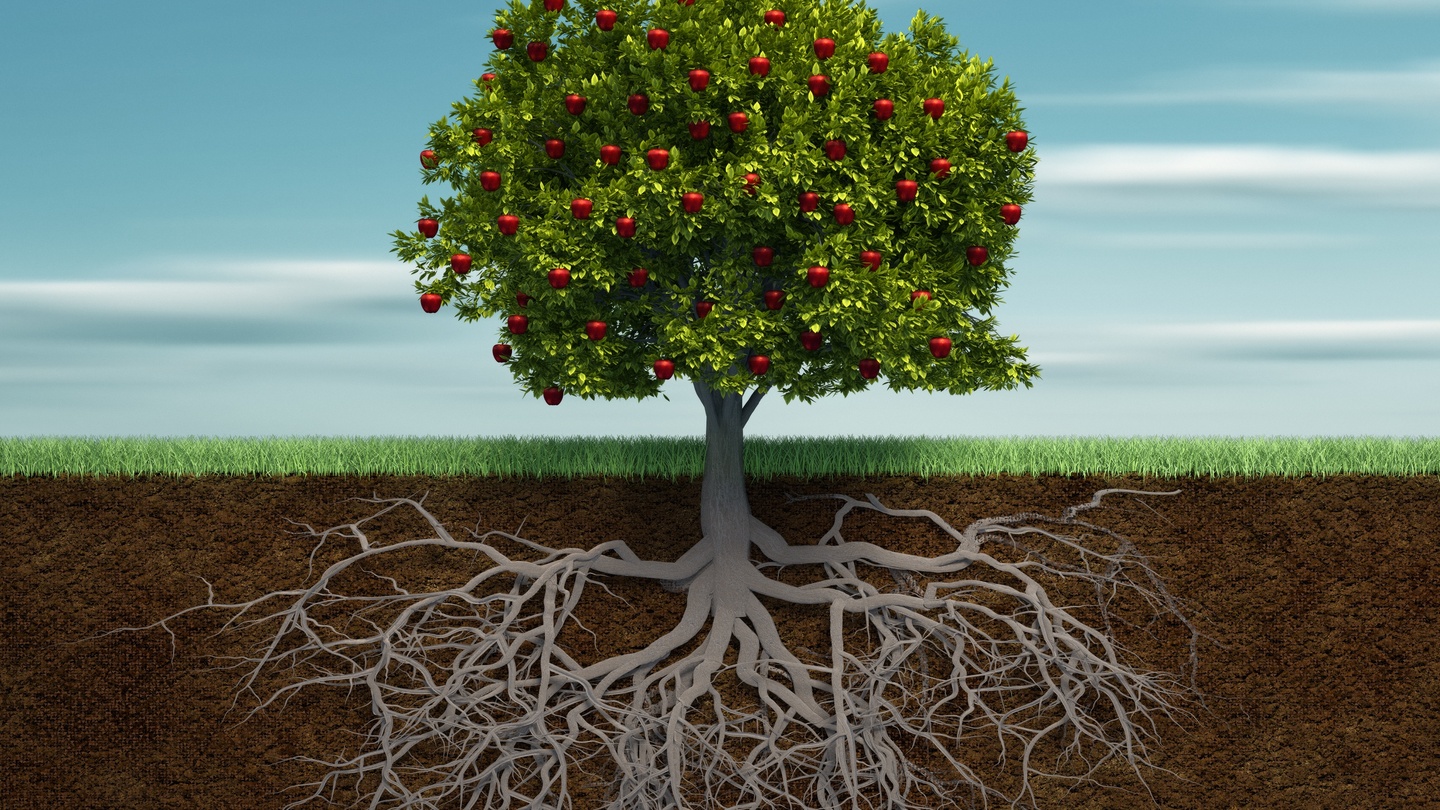
One aspect of fruit trees is that you must cultivate them. It is this author’s opinion that our beloved state of South Carolina has the best extension service to its people through Clemson University. Here are two quotes on the basics of cultivating fruit trees. First, they state for apple and pear trees, “Training and pruning are essential for growing fruit successfully. Fruit size, quality and pest management are influenced by training and pruning. Untrained and unpruned trees become entangled masses of shoots and branches that produce little or no fruit and harbor insects and diseases.”[1] The second quote, which attends to the famous pecan tree that grows in almost any soil from the Low-country to the Piedmont, states concerning its fertilization; “Fertilization is one of the most important practices for bearing trees. If the trees are to produce a good crop, terminal growth should be 6 inches each year…. This fertilizer should be applied evenly beneath the canopy of the tree in mid- to late February. Zinc nutrition is especially important in pecan production.”[2] So, we understand from these two examples of nature that growing good fruit trees takes work. Much goes into having successful fruit: training. pruning, watering, and proper fertilization. And for the spiritual life, this is a great illustration for successfully beautiful fruit that should emerge from our lives in Christ.
Notice how Paul begins this verse, “But.” This word is a very important word for it gives us a striking term of contrast. We must ask, “what is being contrasted?” Spurgeon reminds us, “That ‘but’ is placed here because the apostle has been mentioning certain works of the flesh, all of which he winnows away like chaff, and then sets forth in opposition to them “the fruit of the Spirit.” We then see that there are two powers contrasted. Then we must ask, what two “powers” are at work in the mortal body of every believer? Paul answers “the flesh sets its desire against the Spirit (this is continual never stopping), and the Spirit against the flesh; for these are in opposition (again, continually) to one another, so that you may not do the things that you please…” (Gal 5:17ff) So, we see two contrasting “powers,” one natural, the other supernatural; which bear two kinds of fruit, one “natural” (sins of the flesh) and the other supernatural (fruit of the Spirit). It is crucial to note that if we want our fruit tree (our heart) to be healthy and produce healthy fruits of the spirit without the entanglement of branches and vines of wicked counsel (Job 21:16; Ps 1:1; Pr 12:5) of the world (Ps 2:1-3; Is 13;11), and the pests of carnal sin eating at us (Ro 6:6; Ga 5:24), or the malnutrition of our own spirit to occur (1 Cor 3); then we must cultivate the tree for good health.
The only way to bring forth the fruit of the Spirit is to obey the command to continually walk in the Spirit (Ga 5:16ff). This is rather mysterious in itself because even that obedience is enabled by the Spirit (Ph 2:13ff). So, what is it that the Spirit uses to cultivate our heart? It is the Word of God. As Sanderson states, “The word of God is the vehicle by which faith comes to us (Ro 10:17). This faith even unites us to Christ who then justifies and sanctifies us (1 Co 1:30)”[3] (emphasis mine). Scripture is important for the development of the Christian life. This means of grace is given to God’s children for the cultivation of producing the fruits of the Spirit. Paul tells his young protégé Timothy that, “All Scripture is inspired by God and profitable for teaching, for reproof, for correction, for training in righteousness” (2 Ti 3:16). In other words, Scripture is sufficient to meet the needs of the believer for anything he/she may face. Our Westminster Confession of Faith gives great insight here:
We can be sure that all of God’s word is sufficient for “all things necessary for His own glory, man’s salvation, faith and life, and is either expressly set down in Scripture, or by good and necessary consequence can be deduced from Scripture: unto which nothing at any time is to be added, whether by new revelations of the Spirit, or traditions of men.”[4]
Therefore,
even as the flesh of unbelievers will always produce deeds of the flesh, so too
believers now indwelt by the Spirit will always produce some good fruit. It is
not unexpected that one aspect of the fruit listed here might be better
developed than others, but the point is that all are present in every believer.
Our Lord’s desire for each believer is to produce a “bumper crop” as
He explained to His disciples, “By this is My Father glorified, that you
bear much fruit, and so prove to be My disciples.” (John 15:8) Clearly
fruit in this context refers not just to the fruit of the Spirit but to all
over aspects of spiritual fruit such as converts, etc. However, the amount of
fruit bore by believers is dependent on one’s willingness to abide in Jesus for
as He said, “I am the vine, you are the branches; he who abides in Me, and I
in him, he bears much fruit; for apart from Me you can do nothing” (John
15:5). Abiding in Jesus is diligent
study of God’s Word. Training. pruning, watering, and proper fertilization of
our “tree” to produce healthy fruits of the Spirit comes by diligent study of
Scripture in order to see Jesus. These fruits are ours, and get healthier as we
look to Him in His Word.
[1] https://hgic.clemson.edu/factsheet/pruning-training-apple-pear-trees/
[2] https://hgic.clemson.edu/factsheet/pecan-planting-fertilization/
[3] Sanderson, John W. The Fruit of the Spirit. New Jersey: P&R Publishing, 1984, p. 32.
 Andrews PCA